
News
Energy Transition House in Alphen is now a reality
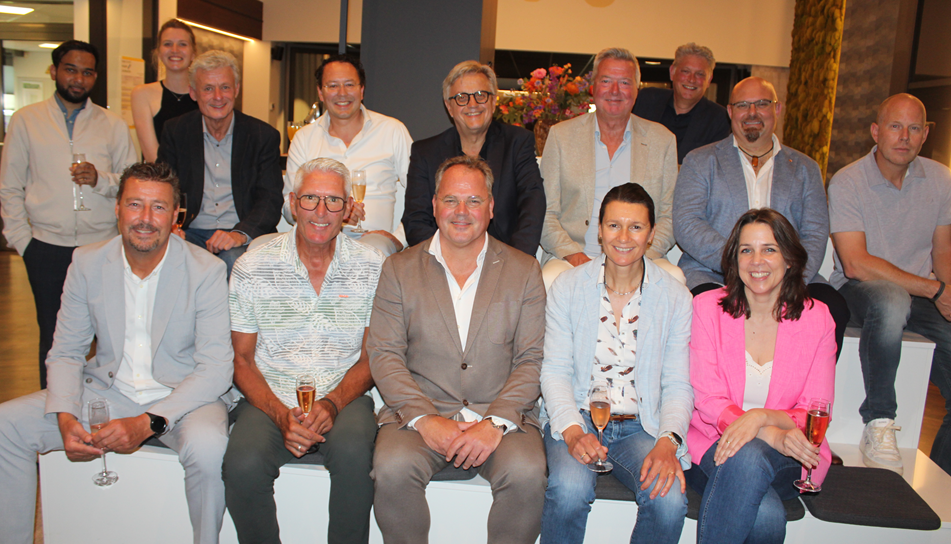
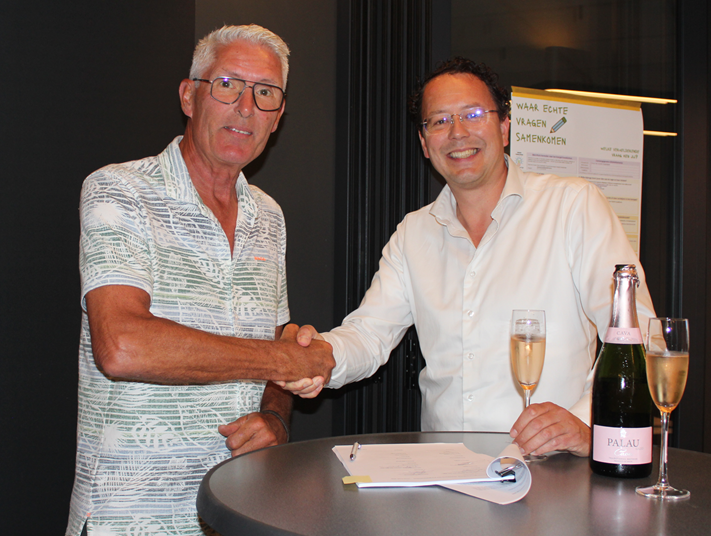
The Alphen Energy Transition House is now a reality. On 14 June, the founders, including Energiek Alphen aan den Rijn, signed a broad cooperation agreement. They will be working on ‘learning, working and innovating’ around the climate and energy transition.
At the Energy Transition House (ETH), engineering companies and regional educational organisations in Alphen are working on solutions to issues that the energy transition brings with it for the labour market and education. How do we ensure that young people choose a career in engineering or sustainability? How can we strengthen residents' confidence in, for example, the heat transition in their neighbourhood? Or: how can entrepreneurs more easily connect with new knowledge, talent and innovations?
The Energy Transition House is an initiative of the municipality of Alphen aan den Rijn, the Alphen business association VOA, the Economic Development Board Alphen aan den Rijn (EDBA), Energiek Alphen aan den Rijn, Rijnvicus, mboRijnland and Scope Scholengroep. It is supported by the Economic Board Zuid-Holland and Holland-Rijnland. Participating companies are Ponsioen Installatietechniek, Van der Werff Groep, Goudkuil Bouwmanagement, ST Warmte and Lieftink Geveltechniek, where the signing of the cooperation agreement took place. TU Delft had already signed the agreement earlier and The Hague University of Applied Sciences will join after the summer recess.
Thirteen initiatives already
This network has grown considerably in recent months and already has thirteen initiatives at its inception, ranging from technical education and higher professional education/vocational training programmes to challenge-based learning, including entrepreneurship and mobile meeting places. “We use an approach that allows partners to explore, deepen, test and implement their ideas,” says Erwin Niedeveld, overall programme manager of the ETH. “This creates a learning environment in which young people learn to work on sustainable solutions directly in practice. Not from a book, but in real life and at companies in the region. This helps young people to be better prepared to start their careers and supports entrepreneurs in training future skilled workers.”
Another initiative is that of Energiek Alphen to train volunteers to become energy coaches, so that they can advise and support residents in their own neighbourhoods with sustainable measures at home. “The establishment of the Energy Transition House was initiated by the local council, the business community and the education sector. The labour market is currently eager to recruit people to work in the energy transition and sustainability sectors. This places high demands on employers and their staff, as well as on the education sector,” says Erik de Ruijter, chair of Energiek Alphen aan den Rijn. “We sought to connect with the Energy Transition House from the outset, for example because we can play a role as a provider of training courses to coaches, residents and (sports) organisations.”
He continues: “The focus is on joint innovation between participating companies and educational institutions, residents and social (sports) organisations. The energy transition requires a different way of thinking and different skills. The Energy Transition House will be the place where we come together for retraining, further training, experiments and practising new techniques and practical innovations. We focus primarily on behavioural change. We offer information, training and energy-saving projects to residents, associations and organisations in the municipality. They all have a great need for knowledge.”
Wishes and actions
The board of Energiek Alphen has various ideas and actions in mind to contribute concretely to the objectives of the Energy Transition House. Their implementation depends in part on cooperation and coordination between the partners, says De Ruijter. “The Energy Transition House brings us together and fulfils an important coordinating role. The ETH is therefore much more than a paper network. Partners are actually working together.” The ETH will be housed in Rijnvicus. Incidentally, Energy Transition House is a provisional name. Niedeveld: “Behind the scenes, we are working on a new name, a recognisable image and appropriate language that better reflects what we as a network really stand for: cooperation, energy, action, hope and pride. At the same time, we are developing an appropriate corporate identity, a representative website and news and social media channels that invite people to participate. Whether you are an entrepreneur, resident, student, policymaker or teacher, if you have good ideas or want to participate in an existing idea, join us.”
Would you like to know more? Please feel free to contact Erwin Niedeveld, Programme Manager at EnergieTransitieHuis (ehwniedeveld@leadglocal.eu).
